In brief
- Lightweighting means reducing the amount of PET used per unit while maintaining the function of the packaging.
- Less material means less raw material, shorter heating and lower transport weight.
- Top load, internal pressure, shelf life and filling line compatibility set the limits of lightweighting; every step must be verified by testing.
When sustainability in packaging is discussed, recycling is usually the first topic that comes to mind. Yet the most direct way to reduce the environmental impact of packaging is to reduce the amount of material needed to produce it. Lightweighting aims to lower the amount of PET used per unit without compromising the function of the packaging.
Why does lightweighting matter?
In life cycle assessments (LCA) of PET packaging, raw material production is usually one of the largest impact items. A small reduction in preform weight therefore turns into a significant difference in raw material and emissions at high production volumes. The effect of lightweighting is not limited to raw material:
- Less energy: A lighter preform requires less melt in injection, and less mass is heated in the blow moulding oven.
- Lighter shipments: As the weight of the packaging decreases, the total weight carried in shipments of empty packaging and filled products falls.
- Lower cost: Raw material accounts for a significant share of packaging costs; as weight decreases, the unit cost falls too.
Which areas can be lightweighted?
Neck (finish)
The neck is the area that does not change shape during blow moulding and therefore remains relatively thick. Switching to shorter and lighter neck finish standards offers a significant lightweighting opportunity. For example, the PCO 1881 neck used on water and carbonated beverage bottles has a shorter and lighter neck than PCO 1810. Short-neck standards such as 29/25 and 30/25 used on water bottles serve the same purpose. Because a change of neck also requires a change of cap, it must be planned together with cap supply.
Body and base
The wall thickness distribution in the body is determined by the preform design and the stretch ratios during blow moulding. A well-designed preform directs material to the areas where it is needed and reduces unnecessarily thick areas. Base geometry also directly affects both strength and material usage.
The limits of lightweighting
There is a limit to weight reduction, and this limit is different for each product. The main criteria to be assessed are:
- Top-load resistance: The packaging must withstand the vertical load applied during stacking, palletising and capping.
- Internal pressure and vacuum: Internal pressure in carbonated beverages and, under certain filling conditions, the vacuum formed after cooling place stress on the body.
- Shelf life: A thinner wall can increase oxygen and carbon dioxide permeation; the shelf life of the product must be re-verified.
- Line compatibility: Lighter packaging must remain compatible with the conveying, gripping and capping equipment on the filling line.
- User perception: Packaging that flexes too much in the hand can create a negative perception of product quality.
How is a lightweighting project carried out?
- Setting the target: The weight of the current packaging, the performance requirements and the target weight range are clarified.
- Design: The preform and packaging geometry are redesigned; if necessary, the neck finish standard is changed.
- Sample production: Sample preforms and packaging are produced with the new design.
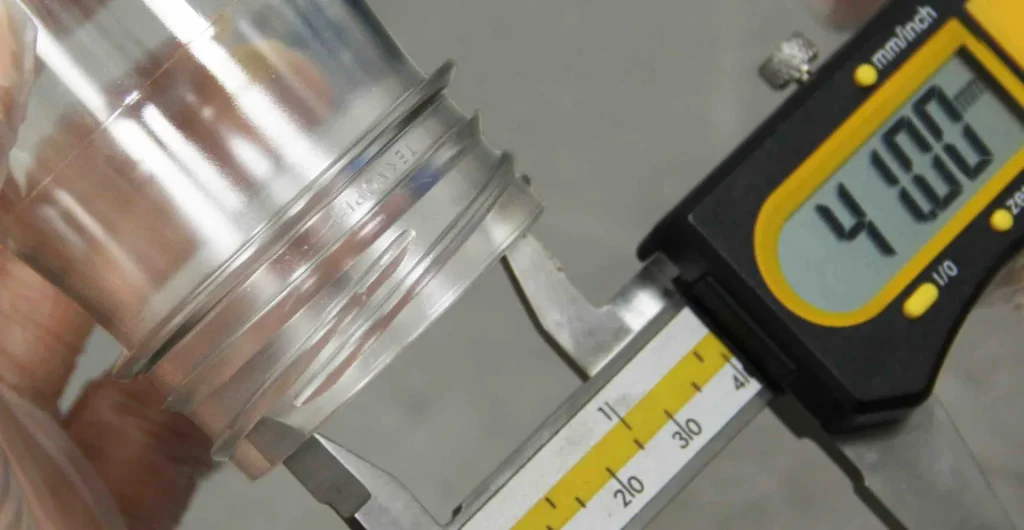
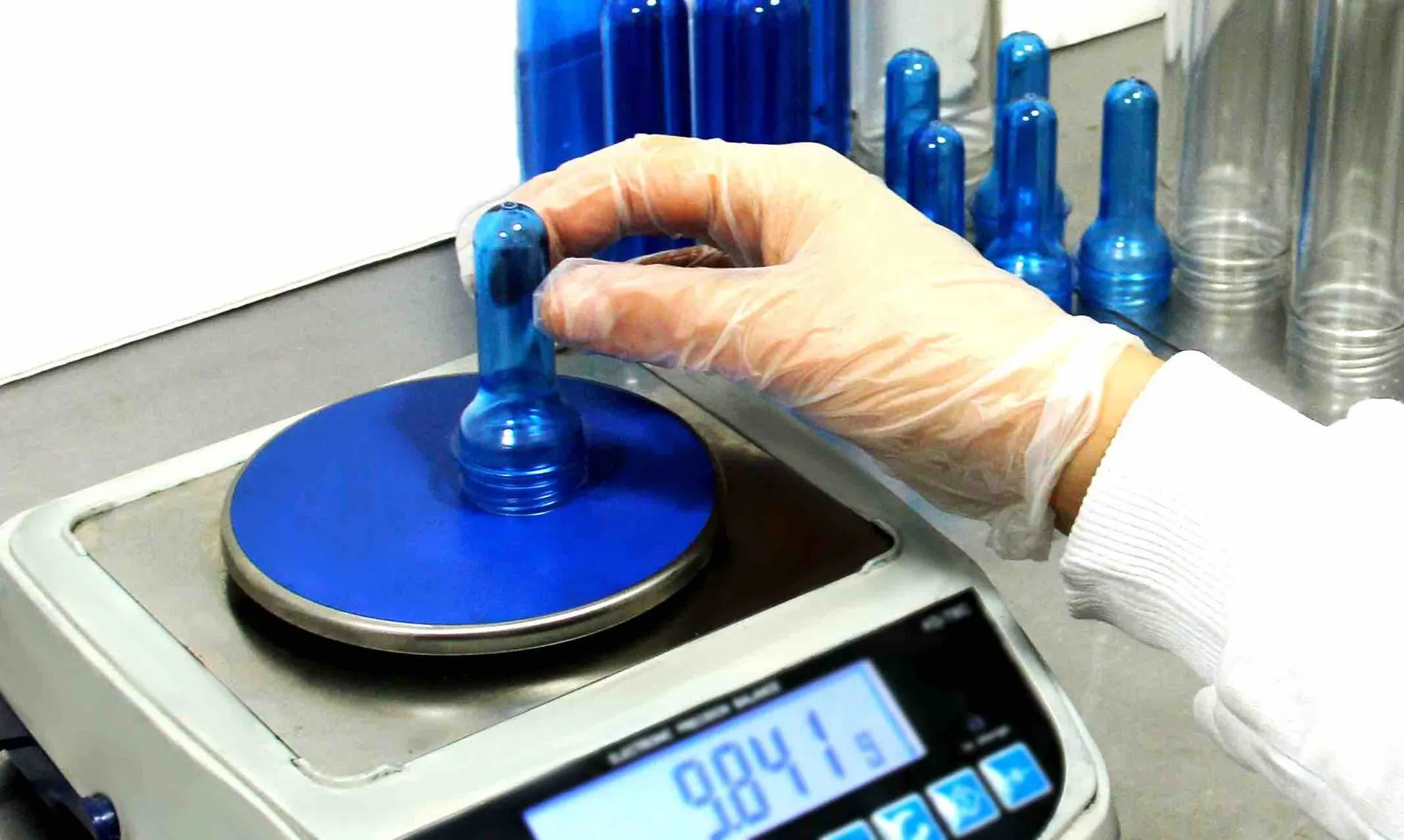
- Tests: Weight, dimensions and wall thickness distribution are measured; top-load, pressure, drop and leak-tightness tests are carried out.
- Line trial and approval: The packaging is trialled on the customer’s filling line; if the results are satisfactory, series production begins.
Lightweighting and recycling must be considered together
Lightweighting and recycled content are not alternatives to each other but complementary. However, care is needed when targeting both at the same time: the I.V. value and impurity level of rPET can affect the strength of very thin-walled packaging. If weight reduction and increasing the rPET rate are addressed in the same project, each change should therefore be tested separately and the results evaluated together.
Common mistakes
- Focusing only on weight and overlooking the palletising and stacking conditions of the packaging.
- Putting packaging that has passed laboratory tests into series production without a trial on the customer’s filling line.
- Leaving the cap, capping machine and leak-tightness tests until later when changing the neck.
How is the carbon footprint measured?
To express the environmental impact of lightweighting in figures, the product carbon footprint is calculated. These calculations are usually based on ISO 14067 (carbon footprint of products) and ISO 14040 and ISO 14044 (life cycle assessment). Clearly stating the scope of the calculation (for example, from raw material to factory gate) and the emission factors used is important for the results to be comparable.
Lightweighting at Teknopet
We produce our preforms and jars with different weight options and optimised designs. Our R&D team carries out design work aimed at reducing the packaging weight of our customers; samples undergo weight and dimension checks in our quality laboratory. You can find the lightweighting programme we are running on the Environmental Projects page.
Calculate: You can see the annual PET saving and estimated CO₂e impact for your own product with the Lightweighting Calculator.
Explore weight options
You can filter our PET preforms, in 13 neck finish types and a wide weight range, by weight.
Legislation and sources
- ISO 14067 – Greenhouse gases: Carbon footprint of products
- ISO 14040 and ISO 14044 – Life cycle assessment: principles, framework and requirements