In brief
- PET packaging is produced in two stages: first the preform by injection moulding, then the bottle or jar by stretch blow moulding.
- The neck takes its final dimensions in the injection mould; in blow moulding only the body and base are formed.
- Weight, dimension, acetaldehyde, I.V. and visual defect checks are carried out at both stages.
A PET bottle or jar on a supermarket shelf is in fact the result of two separate production steps. First, PET granules are melted to produce a preform, an intermediate product that resembles a test tube. The preform is then reheated and blown inside a mould to take its final shape. In this article we describe these two stages and the main parameters checked at each stage.
1. Drying
PET is a moisture-absorbing (hygroscopic) polymer. When moist raw material is melted, the polymer chains are shortened by hydrolysis; the intrinsic viscosity (I.V.) drops and the mechanical properties of the product weaken. For this reason, the granules are dried for several hours in dryers with dry, hot air (typically in the range of 160–180 °C) before injection. The aim is to reduce the moisture content of the raw material to very low levels. Moisture measurement before and after drying is the first checkpoint of the process.
2. Injection: producing the preform
The dried PET is melted in the screw of the injection moulding machine and injected through a hot runner system into a multi-cavity mould. Cooled rapidly inside the mould, the preform acquires an amorphous, transparent structure. Insufficient cooling causes whitening (undesired crystallisation) in the preform. After leaving the mould, the preforms continue to be cooled in post-mould cooling stations to prevent deformation.
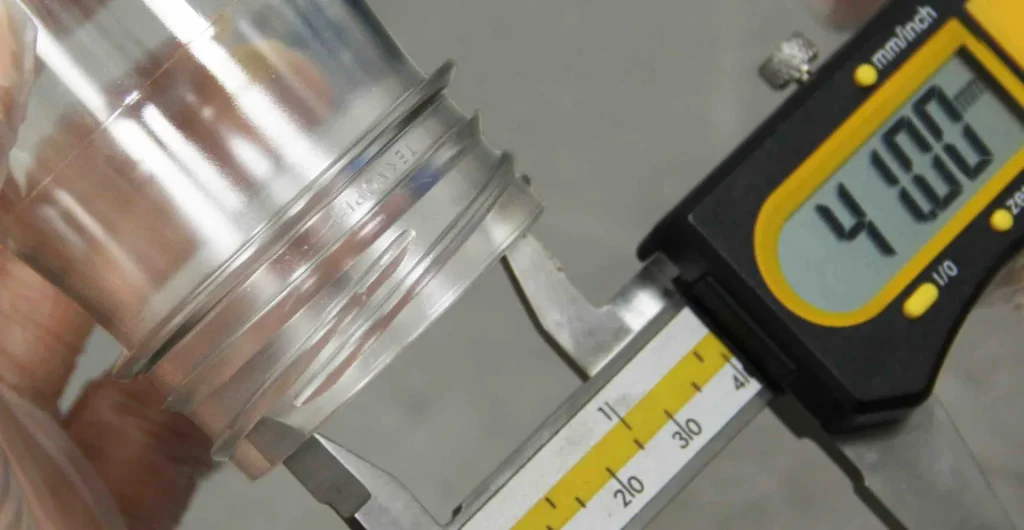
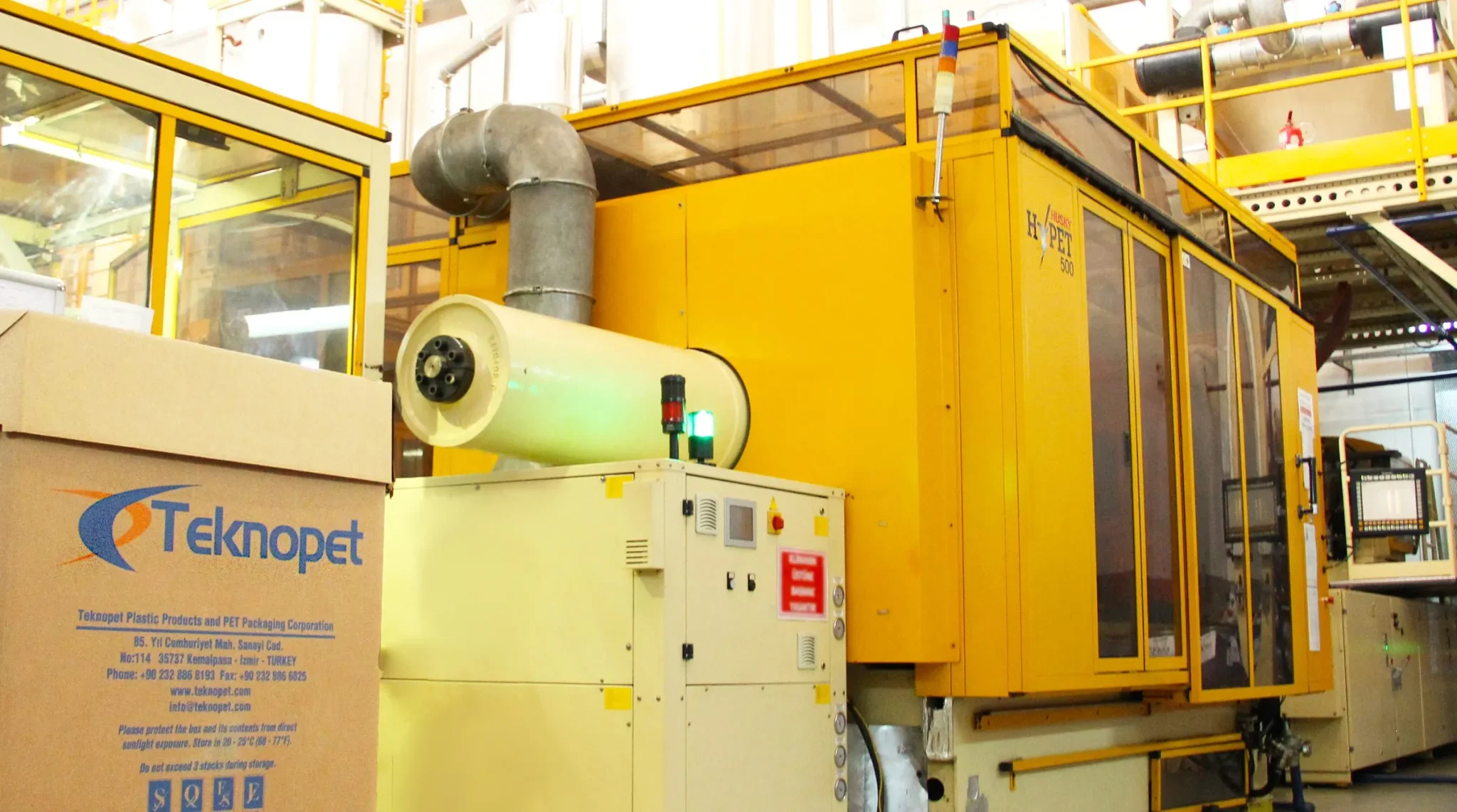
At this stage the neck, i.e. the mouth area, takes its final dimensions. The neck does not change shape during blow moulding; dimensions such as the thread profile, mouth diameter and support ring therefore depend directly on the precision of the injection mould. Teknopet produces its preforms on Husky injection lines and designs and manufactures its moulds in its own mould shop.
3. Preform design
The wall thickness, length and diameter of the preform determine how the material will stretch during blow moulding. When the axial (longitudinal) and hoop stretch ratios are chosen correctly, the PET molecules are oriented in two directions. This orientation provides high strength and a better gas barrier even in a thin wall. Of two preforms with the same weight, the well-designed one produces packaging with a more balanced wall thickness distribution.
4. Blow moulding: from preform to bottle and jar
In two-stage production, preforms are fed into the blow moulding machine and heated in infrared ovens above the glass transition temperature of PET (approximately 90–110 °C). The heated preform is transferred into the blow mould. While a stretch rod extends the preform lengthwise, a low-pressure pre-blow is applied first, followed by a high-pressure main blow. The pressure used in the main blow is typically in the range of 25–40 bar. The material cools against the mould wall and the packaging takes its final shape.
Wide-mouth PET jars are produced on the same principle, this time using wide-mouth preforms such as 82–120 mm. There are also single-stage systems in which the preform is made and blown on the same machine; these are generally preferred for lower-volume products or products with special shapes.
Number of mould cavities and efficiency
Preform moulds are designed with multiple cavities to produce many preforms in a single shot. As the number of cavities increases, the number of preforms produced per unit of time increases; however, to obtain the same weight and dimensions in every cavity, hot runner balance and cooling must be precisely adjusted. For this reason, samples from multi-cavity moulds are monitored cavity by cavity; when a cavity showing a measurement deviation is detected, the necessary intervention is made.
Common defects and possible causes
- Whitening: Insufficient cooling or moisture in the raw material.
- Bubbles and silver streaks: Insufficient drying or air in the melt.
- Short shot: Low injection pressure or a blocked runner.
- High AA: High melt temperature or long residence time.
- Uneven wall thickness in blow moulding: Preform design or oven temperature profile.
5. Quality control
On the preform
- Weight and neck dimensions
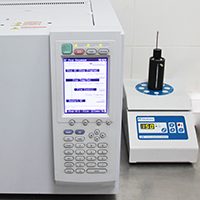
- Acetaldehyde (AA) content – gas chromatography
- I.V. and raw material moisture content
- Colour and visual defects (bubbles, whitening, short shots)
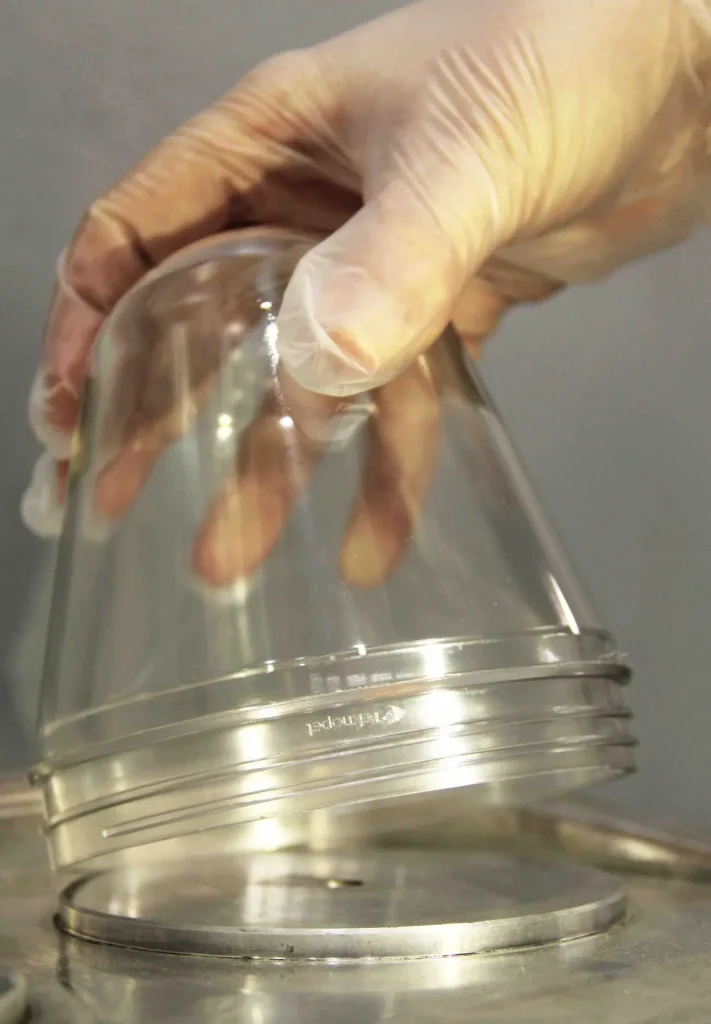
- Stress check – inspection under polarised light
On the bottle and jar
- Capacity and dimensions
- Wall thickness distribution
- Top-load and pressure resistance
- Leak-tightness – immersion test
In the Teknopet quality laboratory, these checks are carried out 24/7 throughout production; measurements are recorded in accordance with GLP principles.
Preforms ready for blow moulding
Explore our PET preforms in 13 neck finish types, from 28/410 to 120 mm screw neck.